Be yourself; Everyone else is already taken.
— Oscar Wilde.
This is the first post on my new blog. I’m just getting this new blog going, so stay tuned for more. Subscribe below to get notified when I post new updates.
Be yourself; Everyone else is already taken.
— Oscar Wilde.
This is the first post on my new blog. I’m just getting this new blog going, so stay tuned for more. Subscribe below to get notified when I post new updates.

Score
0 / 3
What does it mean to make a guard?To point your non-dominant elbow toward the bowler.To grip the bat tightly with both hands.
Try again! As a matter of fact, you should only grip the bat tightly with your non-dominant hand. Your dominant hand should be below it, holding on with a looser grip. Try again…To draw a line in the turf from the middle wicket.
Score
0 / 3
If the ball is bouncing high, how should you step as you prepare to hit it?ForwardBackwardActually, you shouldn’t move your feet if the ball is bouncing high.
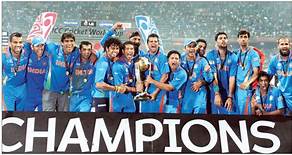
If there is any living legend who is making Indians proud at the moment, Virat Kohli is the sole name. He is the playmaker and is the perfect name to lead India at the ICC Cricket World Cup 2019.

The man who has hit 200 three times in his entire cricket carrier, India can’t get a better opener than Hitman. Having immense experience, skills, and thrust, Rohit Sharma is a sheer match winner for the Indian team.

Right after Rohit Sharma, if there is an opener who can accompany him at the start, Shikhar Dhavan Aka Gabbar is the name. He is immensely skilled, talented and can give India, flying start they truly deserve.

Vijay Shankar, one of the emerging player in Indian team got selected for the World cup. Shankar is an all-rounder where he can bat, bowl and field.

With MS Dhoni, no introduction is needed at any cost. Even at age 37, he is probably the best finisher of all times and is still playing well for the CSK. A man who can finish games for India, he is the gold, India will need for the World Cup.

MS Dhoni
Being the KKR team captain since 2018, Dinesh Karthik has just revolutionized his cricketing career. Also, the Indian team has always struggled with their later batsman and if Dinesh Karthik can fill the gap, no one can be a better choice than him.

Wondering about a reliable batsman at number 5 will bring Kedar Jadhav into the limelight. He is multi-talented, can bat, bowl and have the tendency to grab wickets at any point of time. Indeed, there is no replacement for Kedar Jadhav and the selectors must surely include him for the World Cup Squad.

Currently, if there is an all-rounder which India desperately needs, Hardik Pandya is the go-to name. He is showing immense talent in the IPL where hitting sixes have become a cakewalk for him. If he is fit, selectors will surely include his name for the World Cup.

Ravindra Jadeja is the rocket man for India where his arms are a much need for the World Cup. Even in the IPL, he is showing a glimpse of good batting form which can be a blessing in disguise for Indian cricket. Probably, he should make for the playing 11 right after Hardik Pandya.

Presently, the lead bowler for KKR team, Kuldeep Yadav has done extremely well for the Indian team. He has picked tons of wickets and has played a greater role in improving the Indian team’s rankings.

Yuzvendra Chahal has played a great hand in India’s success and will be a part of the Indian team squad. For the Bangalore, Chahal is like a lifeline and will certainly try it’s best to be a one for India too.

Currently, the number one bowler of the cricketing world, Jasprit Bumrah is a sure shot man at the world cup 2019. Since a couple of years, he has taken Indian bowling to the next level where he will be leading India’s bowling attack. Of course, he has got no replacement, and the Indian board will play Bumrah, without any doubt.

Just after Bumrah, Bhuvaneshwar Kumar is a bowler India can rely on the death overs. Over the years, his bowling has improved considerably and will look to lead the bowling attack aside Bumrah.

Thinking about retirement a few months back, Mohammed Shami has come back strongly. In past months, he has taken massive wickets and is a must to include for the World Cup. In the Indian Team for World Cup 2019, if there is any pacer who have got accuracy, Mohammed Shami is the sole name.

KL Rahul selected for India team world Cup 2019. He is in great for now in IPL. Rahul, right-handed batsman already proved his batting brilliance for India. His past performance helped him to get into the ICC World Cup 2019.

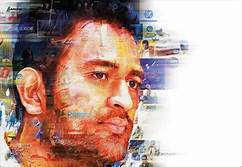

Mahendra Singh Dhoni born 7 July 1981, commonly known as MS Dhoni, is an Indian international cricketer who captained the Indian national team in limited-overs formats from 2007 to 2016 and in Test cricket from 2008 to 2014. Under his captaincy, India won the 2007 ICC World Twenty20, the 2010 and 2016 Asia Cups, the 2011 ICC Cricket World Cup and the 2013 ICC Champions Trophy. A right-handed middle-order batsman and wicket-keeper, Dhoni is one of the highest run scorers in One Day Internationals (ODIs) with more than 10,000 runs scored and is considered an effective “finisher” in limited-overs formats. He is also regarded by some as one of the best wicket-keepers in modern limited-overs international cricket.
He made his ODI debut in December 2004 against Bangladesh, and played his first Test a year later against Sri Lanka. Dhoni has been the recipient of many awards, including the ICC ODI Player of the Year award in 2008 and 2009 (the first player to win the award twice), the Rajiv Gandhi Khel Ratnaaward in 2007, the Padma Shri, India’s fourth highest civilian honour, in 2009 and the Padma Bhushan, India’s third highest civilian honour, in 2018.[7] He was named as the captain of the ICC World Test XI in 2009, 2010 and 2013. He has also been selected a record 8 times in ICC World ODI XI teams, 5 times as captain. The Indian Territorial Army conferred the honorary rank of Lieutenant Colonel to Dhoni on 1 November 2011. He is the second Indian cricketer after Kapil Dev to receive this honour.
Dhoni also holds numerous captaincy records such as the most wins by an Indian captain in Tests, ODIs and T20Is, and most back-to-back wins by an Indian captain in ODIs. He took over the ODI captaincy from Rahul Dravidin 2007 and led the team to its first-ever bilateral ODI series wins in Sri Lanka and New Zealand. In June 2013, when India defeated England in the final of the Champions Trophy in England, Dhoni became the first captain to win all three ICC limited-overs trophies (World Cup, Champions Trophy and the World Twenty20). After taking up the Test captaincy in 2008, he led the team to series wins in New Zealand and the West Indies, and the Border-Gavaskar Trophy in 2008, 2010 and 2013. In 2009, Dhoni also led the Indian team to number one position for the first time in the ICC Test rankings.
In 2012, SportsPro rated Dhoni as the sixteenth most marketable athlete in the world. Dhoni is the co-owner of Indian Super League team Chennaiyin FC. In June 2015, Forbes ranked Dhoni at 23rd in the list of highest paid athletes in the world, estimating his earnings at US$31 million. In 2016, a biopic M.S. Dhoni: The Untold Story was made about him.
In 2013, under his captaincy, India became the first team in more than 40 years to whitewash Australia in a Test series. In the Indian Premier League, he captained the Chennai Super Kings to victory at the 2010, 2011 and 2018 seasons, along with wins in the 2010 and 2014 editions of Champions League Twenty20. In 2011, Time magazine included Dhoni in its annual Time 100 list as one of the “Most Influential People in the World.” Dhoni holds the post of Vice-President of India Cements Ltd., after resigning from Air India. India Cements is the owner of the IPL team Chennai Super Kings, and Dhoni has been its captain since the first IPL season. He announced his retirement from Tests on 30 December 2014.


This is an example post, originally published as part of Blogging University. Enroll in one of our ten programs, and start your blog right.
You’re going to publish a post today. Don’t worry about how your blog looks. Don’t worry if you haven’t given it a name yet, or you’re feeling overwhelmed. Just click the “New Post” button, and tell us why you’re here.
Why do this?
The post can be short or long, a personal intro to your life or a bloggy mission statement, a manifesto for the future or a simple outline of your the types of things you hope to publish.
To help you get started, here are a few questions:
You’re not locked into any of this; one of the wonderful things about blogs is how they constantly evolve as we learn, grow, and interact with one another — but it’s good to know where and why you started, and articulating your goals may just give you a few other post ideas.
Can’t think how to get started? Just write the first thing that pops into your head. Anne Lamott, author of a book on writing we love, says that you need to give yourself permission to write a “crappy first draft”. Anne makes a great point — just start writing, and worry about editing it later.
When you’re ready to publish, give your post three to five tags that describe your blog’s focus — writing, photography, fiction, parenting, food, cars, movies, sports, whatever. These tags will help others who care about your topics find you in the Reader. Make sure one of the tags is “zerotohero,” so other new bloggers can find you, too.
Have a WordPress.com account? Log in now.

